
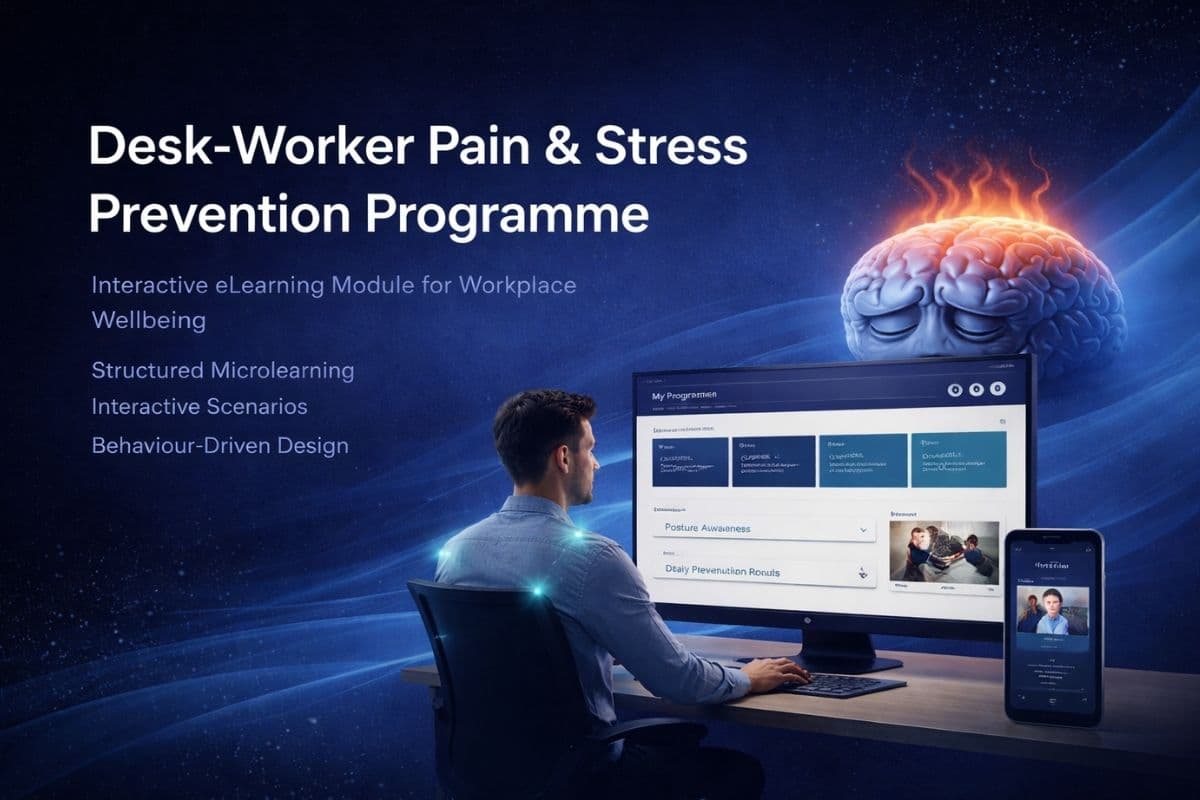
An interactive workplace wellbeing e-learning module developed to help desk-based employees understand the relationship between posture, musculoskeletal discomfort, and stress — and apply realistic prevention strategies within a typical office environment.
This project demonstrates a behaviour-focused, modern approach to corporate training design.
Project Overview
- Project Type: Corporate Wellbeing e-Learning Module
- Audience: Desk-based employees/office teams
- Delivery Format: Self-paced digital learning
- Development Tool: Articulate Rise (or Storyline — adjust if needed)
- Visual Design Support: Adobe Illustrator / Photoshop (if applicable)
- My Role: Instructional design
The Challenge
Desk-based roles often combine prolonged static posture with cognitive stress. Traditional wellbeing training tends to be either overly theoretical or too simplistic to drive behaviour change.
Fits into limited workplace schedules
Avoids medical overload while remaining credible
Encourages small, sustainable behaviour shifts
Maintains engagement through interaction rather than passive reading
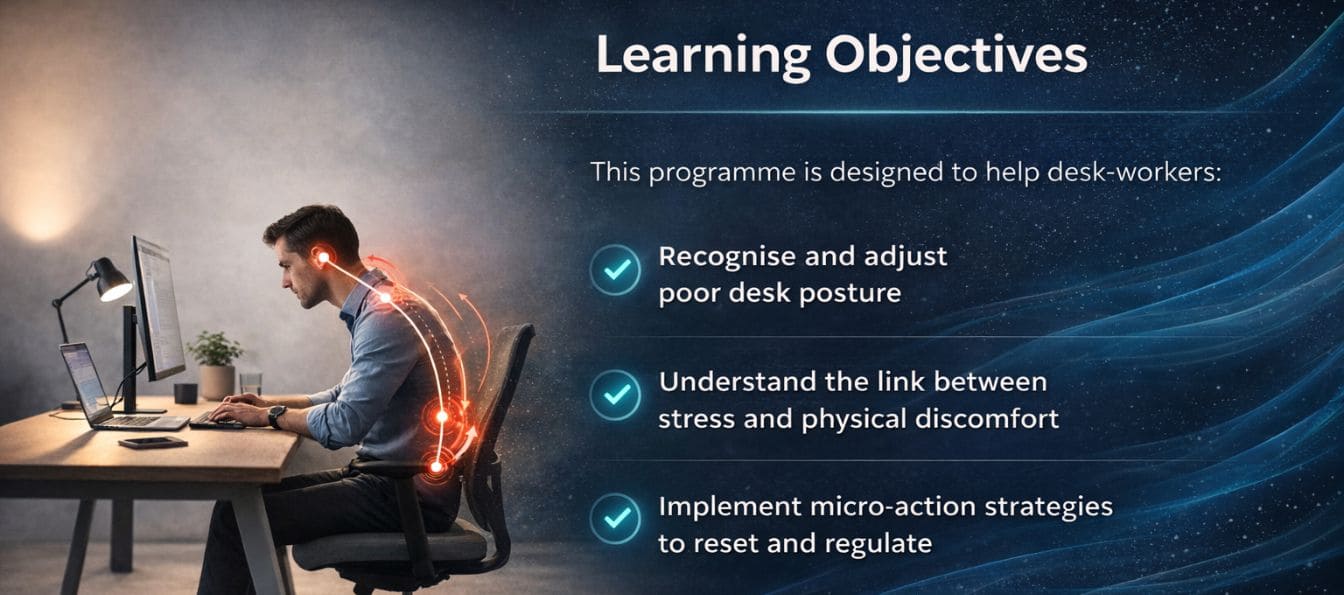
Learning Objectives
Recognise common desk-related pain triggers
Understand the stress–pain feedback loop
Apply short posture correction techniques
Implement micro-movement breaks
Use simple stress regulation tools
Build a practical daily prevention routine
Instructional Design Strategy
Chunked learning blocks to reduce cognitive load
Progressive disclosure of information
Scenario-led framing to maintain relevance
Immediate application prompts (“Try this now”)
Reinforcement through interaction
The tone remains professional and supportive, aligned with corporate well-being standards.
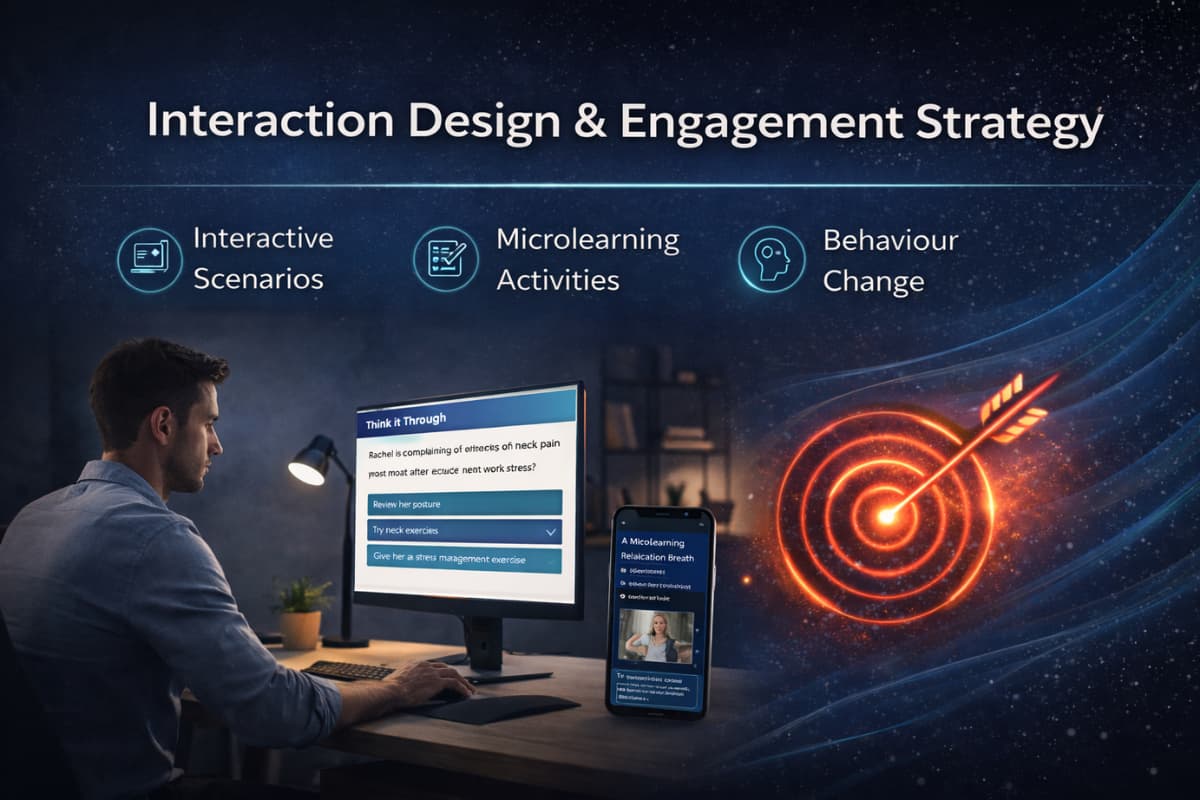
Interaction Design & Engagement Strategy
To prevent passive scrolling, the module integrates multiple interactive components:
Short formative quizzes are placed at the end of key sections to reinforce understanding of the stress–pain connection.
Workplace-based mini-scenarios encouraging learners to identify poor posture patterns and cognitive overload triggers.
Used to prevent text overload and encourage exploration while maintaining clean screen design.
Embedded “micro-action” suggestions prompting learners to test posture resets or breathing techniques during the module.
Concise summary blocks reinforcing behavioural takeaways rather than repeating theory.
Technical Development
The module was developed in Articulate Rise / Storyline using a structured block-based layout (or custom slide-based logic if Storyline).
Consistent spacing and visual hierarchy
Optimised content for desktop-first experience
High contrast typography for accessibility
Logical navigation structure
Modular build allowing future expansion
Where relevant, custom visual elements were created to support clarity and reduce reliance on stock imagery.
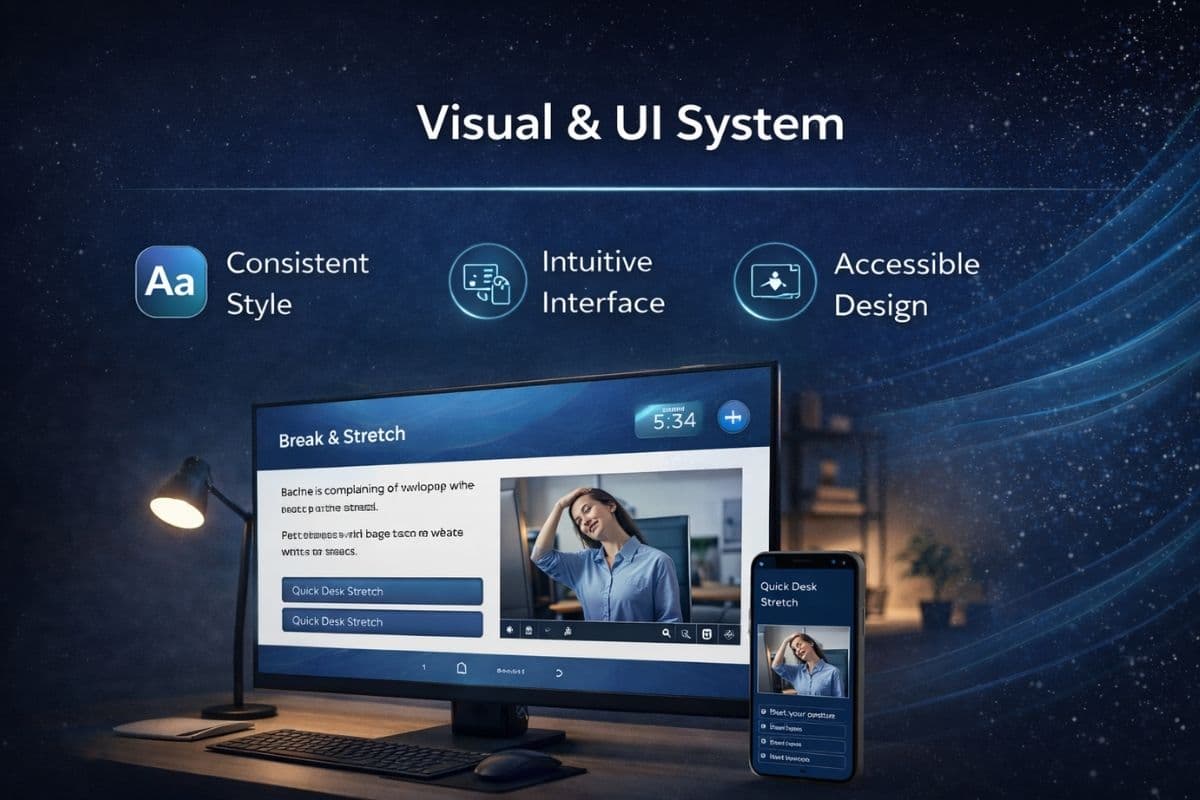
Visual & UI System
Dark-to-blue gradient palette
Clean sans-serif typography
Minimal distraction elements
Subtle abstract stress-wave motifs
Consistent component styling
The “fatigued brain” visual acts as a thematic anchor, representing cognitive overload without using exaggerated medical imagery.
Module Structure
- Introduction to Desk-Related Pain
- Understanding the Stress–Pain Feedback Loop
- Posture & Ergonomic Awareness
- Micro-Movement Interventions
- Stress Regulation Techniques
- Prevention Habit Integration
Each section concludes with reinforcement interaction to support retention and practical application.
Accessibility Considerations
Clear typographic hierarchy
Appropriate contrast ratios
Structured progression
Plain-language explanations
Minimal motion design
Summary
The Desk-Worker Pain & Stress Prevention Programme demonstrates how corporate wellbeing training can combine instructional integrity with practical behavioural focus.
By integrating structured microlearning, purposeful interaction design, and clean visual execution, the module supports knowledge retention while encouraging sustainable workplace habits.
This project reflects a modern, evidence-informed approach to the development of digital learning.